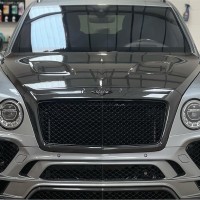
1-Stage Machine Polish: Paint Enhancement Explained
By Alex, Improve Details · Published 5 September 2026 · Last updated 5 October 2026
What is a 1-stage machine polish?
A 1-stage machine polish — also called paint enhancement — is a single polishing step carried out with a machine polisher. Using a finishing polish (and sometimes a light cutting compound) on a polishing pad, it removes light swirl marks and wash marring and restores gloss and clarity to dull or hazy paintwork. It's the biggest visual improvement you can make to a car in a single day.
How paint enhancement works
The process is a condensed version of full paint correction. The car is safely washed and decontaminated first — iron fallout removal, tar removal and clay treatment — because polishing contaminated paint drags particles across the panel. Paint thickness is checked, then the whole car is machine polished in one pass: a dual-action (DA) polisher is the usual choice for enhancement work because it oscillates as well as rotates, making it safe and effective on most paint types. A finishing polish refines the surface, panels are wiped down, and the car is inspected under proper lighting.
What a 1-stage polish fixes — and what it doesn't
Paint enhancement excels at gloss restoration. If your car looks dull, flat or hazy — paint that seems to have lost its depth — a single stage brings back the shine dramatically. It removes light swirl marks and spider webbing, the fine marks from washing that show up in sunlight, along with light wash marring and minor oxidation.
What it won't do is remove deeper defects. Holograms and buffer trails from bad rotary work, deeper scratches, heavy oxidation and water-spot etching need a two-stage or multi-stage correction. Think of it this way: a 1-stage polish makes a good car look great; it can't make a badly damaged car look new. We'll tell you which camp your car falls into before you book.
Three reasons to book a 1-stage machine polish
1. Pre-sale preparation
Selling your car? A pre-sale polish is one of the smartest things you can do. Buyers judge cars on photos first, and swirl-free, glossy paint photographs far better than dull, marked paint. It signals a car that's been cared for — which is exactly what buyers want to see.
2. Reviving dull or hazy paint
Daily drivers pick up wash damage gradually, and one day you notice the car just looks tired. UV exposure, automatic car washes and years of sponge washing leave paint hazy. A 1-stage enhancement strips away that accumulated dullness and brings back the colour and depth you forgot the car had.
3. Preparation before ceramic coating or PPF
Protection locks in whatever's underneath — so you want the paint at its best first. On paint that's already in good condition, a 1-stage polish is the perfect preparation before a ceramic coating or PPF installation: defects are refined out, then sealed in under the protection.
DA polisher vs rotary polisher
You'll hear both terms. A dual-action (DA) polisher oscillates as well as rotates, spreading cutting action over a wider area — safer, more forgiving, and ideal for enhancement work. A rotary polisher spins on a single axis and cuts faster, but in unskilled hands it leaves holograms. We use whichever suits your paint: soft paint (common on Japanese cars) corrects easily but marks easily too, while hard paint (typical of German cars) needs more work. Matching the machine, pad and polish to the paint is the skill — the machine itself is just the tool.
Machine polishing vs paint correction: what's the difference?
Machine polishing is the technique; paint correction is the goal. A 1-stage machine polish enhances gloss and removes light defects in a single step. Multi-stage paint correction chases deeper defects for a near-flawless finish, at greater time and cost. Neither is "better" — they're different answers to different paint. When you contact Improve Details, we look at your paint and recommend the lightest process that gets the result you want.
How to tell if your paint needs a 1-stage or 2-stage polish
Wash the car and look at it in direct sunlight, or hold a bright torch at a shallow angle to the panel. If you see light spider webbing that seems to disappear when the panel is wet, a 1-stage enhancement will almost certainly do it. If you see holograms, deeper scratches, or dullness that stays visible when wet, you're in two-stage territory. Still unsure? Send us photos on WhatsApp (07482 225323) and we'll give you an honest steer before you book.
Based on Lilford Street in Warrington, we carry out 1-stage paint enhancement for drivers across Warrington, Stockton Heath, Lymm, Culcheth, Birchwood and beyond. Call 07933 498857 or message us on WhatsApp (07482 225323) with photos of your car for a quote.
Related services
Frequently asked questions
How long does a 1-stage machine polish take?
Typically a day's work, depending on vehicle size and paint condition. It's the quickest meaningful machine-polish service we offer — a big visual improvement without the time commitment of multi-stage correction.
Will a 1-stage polish remove swirl marks?
Light swirls, wash marring and haze — yes. Deeper swirls, holograms and scratches need a two-stage or multi-stage paint correction. We assess your paint first and recommend honestly.
Is a 1-stage polish worth it before selling my car?
Yes. It's one of the best-value pre-sale treatments: restored gloss and swirl-free paint photographs far better and signals a well-kept car to buyers browsing listings.
Do I need a 1-stage polish before ceramic coating?
If your paint is in good condition with only light defects, a 1-stage polish is the ideal preparation before a ceramic coating — it refines the finish so the coating locks in gloss rather than defects.
Have a question about your car's paint?
Call 07933 498857, message us on WhatsApp, or send photos of your car for honest advice and a quote.
Prefer WhatsApp? Message 07482 225323 with photos of your car for a faster, more accurate quote.